Tag Archive for: Participant Stories

PACE program at Harbor Health helps seniors ‘age in place’ at home

This article was originally published on Dorchester Reporter.

Susan Burke, 79, is OFD and has no desire to leave the neighborhood that she’s always called home. Thanks to Harbor Health’s Program of All-Inclusive Care for the Elderly (PACE) on Morton Street, she can plan on staying put.

PACE serves some 100,000 participants in 33 states, including eight programs in Massachusetts. The fully integrated healthcare model provides participants and their caregivers with a comprehensive package of healthcare and support services, allowing older adults with chronic medical needs to remain at home in their communities.

This year, Harbor Health is celebrating the 30th anniversary of its popular program.

“Thirty years ago, we embraced the PACE model and challenged the assumption that nursing home placement was inevitable for older adults with complex medical needs,” explained Gretchen Reynard, senior vice president for the Elder Service Plan (ESP). “Today, the plan has grown into a vital regional resource, providing care that helps elders stay healthy while living in their communities.”

She added: “As we celebrate 30 years, we feel an even deeper commitment to our founding vision: that older adults deserve to age with dignity, independence, and comprehensive support in the communities they call home.”

Burke has been a participant in Mattapan’s PACE program for the last eight years and she said it has allowed her to remain living safely in Adams Village.

“I’m lucky enough I don’t live alone. I’m going to say my son lives with me, he’s going to say I live with him, but whatever!” joked Burke, a mother of two and a grandmother of three. “It’s a wonderful program, it really is. It helps people. Everyone has their own needs. I’m not the same as the person sitting next to me. The aides that work here try to accommodate them.”

For Burke, the ideal amount of her care is visiting the Morton Street facility twice a week. There, she undertakes physical therapy and connects with community members through daily events and activities.

Her favorite is arts and crafts, but just about everyone else seems to prefer Bingo.

“I don’t care for Bingo, I couldn’t care less if I ever played Bingo. I know people who would rather play Bingo than eat,” she says.

But at the end of the day, the center is much more than crafts and games; it’s a resource that brings together healthcare, home support, and community services all under one plan.

“A PACE program helps people who are 55 years or older, who really want to live in the community,” said Pamela Pattavina, the ESP’s director of Marketing and Enrollment. “It’s really about a place they call home. It could be an apartment, it could be their own home, they might live with their extended family, but whatever they call home is where they want to stay.

“In general, people do not want to end up in a nursing home; they would like to remain at home with services for as long as possible, and that’s what we do. We provide that for them.”

She continued, “We follow them all the way through their journey of aging. That could include hospital care, nursing home care, therapeutic, all different kinds of things. We really follow them all the way through. Not only for them, but for their family.”

PACE helps with things like doctor’s visits, medicine, rides, meals, and daily needs. All medical and support services offered by Medicare and Medicaid are included in PACE.

Added senior medical director Dr. Ilona Kopits: “It’s a true adult day health center like other ones in the city. The difference here is that a clinical component is attached to it. We’re serving a very fragile population. This is a Medicare and Medicaid population. These patients are complicated. They have complicated medical histories; our job is to take care of a really high-risk group.”

To be eligible for the program, participants between 55 and 65 must be disabled, while a disability is not required for those 65 and older.

Regardless of a person’s age, community marketing and senior enrollment specialist Patricia Hooper encourages participants to act sooner rather than later.

“You don’t have to be at the end, you don’t have to be so sick. We want them to come to us when they say, ‘I’m getting older, I might need a little help,’ or ‘I would like to have some socialization.’ You start there, and then that program builds.”

She added: “So many people come to us in a reactive state. You should be looking at this before you’re in crisis. We’re here for you early. This is not a program where you feel like you’re in a nursing home. We really want to age in place with people. Those supports early on create the ability to stay independent even longer.”

According to Kopits, each care plan is individualized for individual patients and their families. The goal of this team is to help make an intimate care plan and then change it as needed,” Kopits said in an interview.

“Maybe we thought a patient was going to be great coming five days a week, but maybe three days a week is actually better for that person. They might start off coming in a lot more. As they get older and, quite frankly, sicker, we might be going to them more. Maybe two years go by, and they can’t come in anymore, so there is a schedule of going out to see them at home.”

But sometimes the opposite happens.

“There are some patients that start off one or two days a week, and we realize, actually, they need us five days a week. A lot of what it is is harm reduction. This is a safe alternative to being at home and forgetting to turn off the stove or leaving the house, and now the police have picked you up.”

Each PACE participant has an Interdisciplinary Team (IDT) made up of professionals – doctors, nurses, social workers, therapists, and dieticians –  who work together to meet the needs of the participant and their families, making living at home easier for everyone involved.

“When we talk to patients, especially older patients, you want to touch on a couple of things: medication, mobility, mentation, and what matters most,” Kopits said. “What is a priority for you? What makes you happy? What is the thing you want to keep being able to do? We ask that when we are making our care plans for our patients.”

Said Reynard: “I think we’re providing a really unique resource to folks who are living in underserved communities. “It’s so unique because it’s what I would consider a one-stop shop. They have access to all the care in one place, which makes it so much easier for care coordination.”

She added, “I’ve heard several times throughout the years, people say we literally changed their lives in so many ways.”

To learn more about the program, visit hhsi.us/elder-service-plan.
PACE: Where You Belong – Part 3: Stories of Inspiration and Empowerment

In the third and final installment of our “PACE: Where You Belong” series, we bring to you heartening stories of inspiration and empowerment from the participants and their caregivers of Neighborhood PACE and Cambridge Health Alliance(CHA) PACE. These narratives reflect the profound impact of PACE programs and illuminate its members’ life-changing experiences.

Kathleen Monteleone – Neighborhood PACE

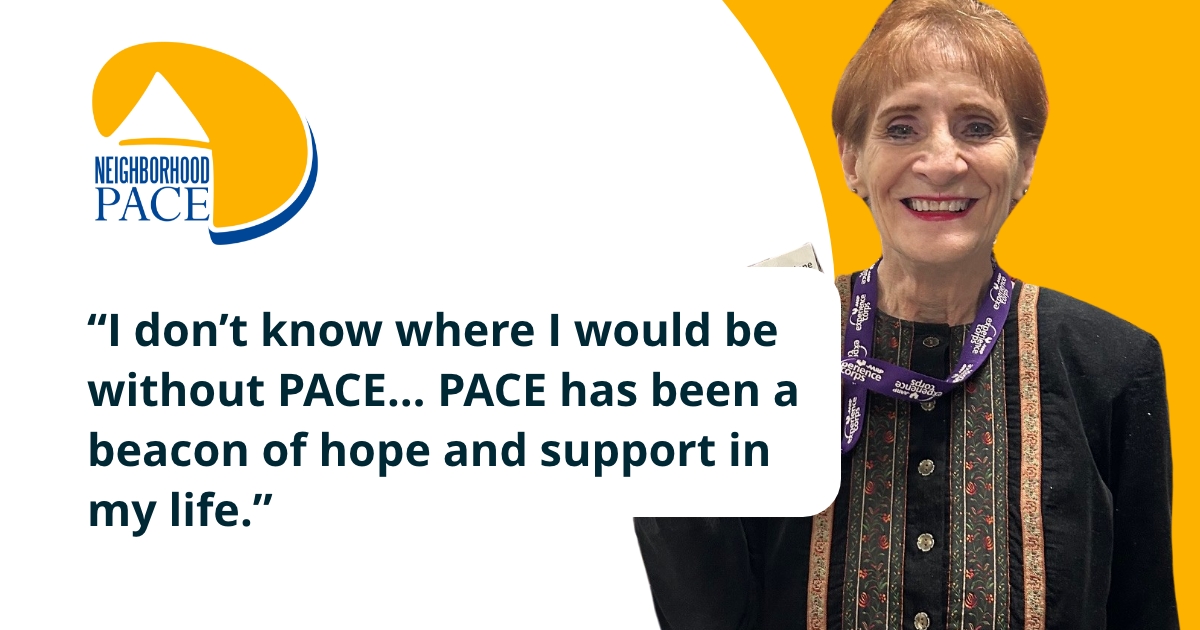
Kathleen Monteleone’s encounter with a medical crisis in 2017 highlights the lifesaving intervention PACE can provide. Experiencing sudden numbness, a PACE nurse’s advice led her to urgent care, revealing a critical brain bleed:

“The PACE Rehab team gave me the tools to help me regain my mobility and independence – qualities I hold dear… I maintain constant communication with all of my Care Team – doctors, nurses, staff – all excellent and truly caring and professional and vital to my well-being. I don’t know where I would be without PACE……PACE has been a beacon of hope and support in my life.”

Her recovery journey, supported by the PACE Rehab team, emphasizes the program’s role in restoring independence and health.

Nilda Goodridge – CHA PACE

For Nilda Goodridge, PACE was a beacon of hope in addressing her mother Sheila’s declining health and social isolation. The program’s adult day services provided Sheila with an enriching social environment, creative stimulation, and medical care, reinvigorating her zest for life:

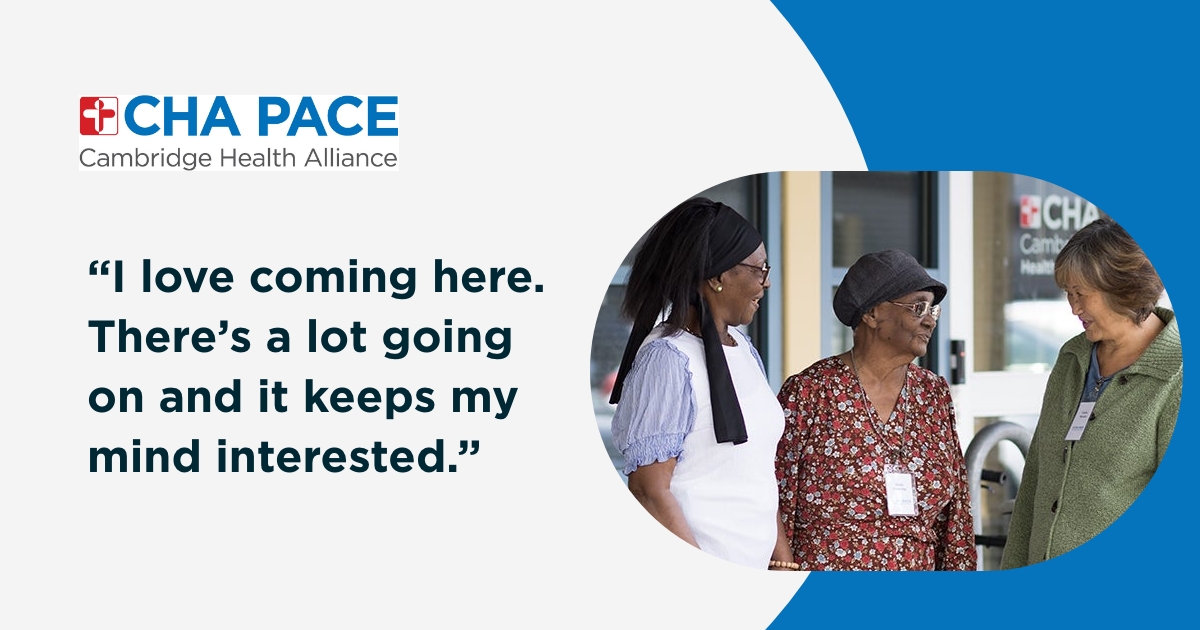
“I love coming here. There’s a lot going on and it keeps my mind interested,” says Sheila, whose laugh comes easily now. “I like the people I’ve met. I say that from my heart because it’s true.”

Nilda’s relief in finding comprehensive support for her mother underscores the far-reaching impact of PACE on families.

Gerald Casey – Neighborhood PACE

Upon his return to East Boston, Gerald Casey’s discovery of PACE marked the beginning of a journey filled with personal growth and community engagement. From starting a book club to participating in health-focused programs, Gerald’s story is one of active involvement and holistic well-being:

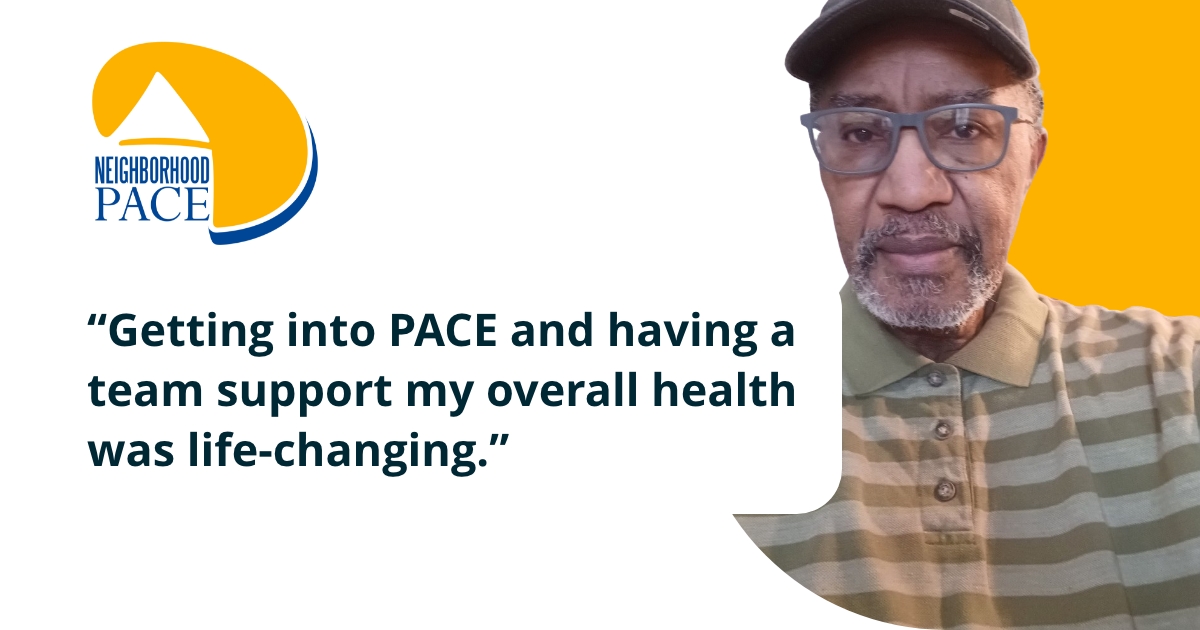
“The most impressive thing about the PACE program is the people who are running the program. I truly believe they care about my health, and I like how they allowed me to have a say in my care… Getting into PACE and having a team support my overall health was life-changing. I started at 300 lbs, and now I am down to 230 lbs, and my blood pressure has stabilized. I can honestly say the PACE program saved my life and gave me a better quality of life.”

His health transformation, overcoming weight and blood pressure issues, is a testament to PACE’s integrated care approach.

Tomiko Matsuda – CHA PACE

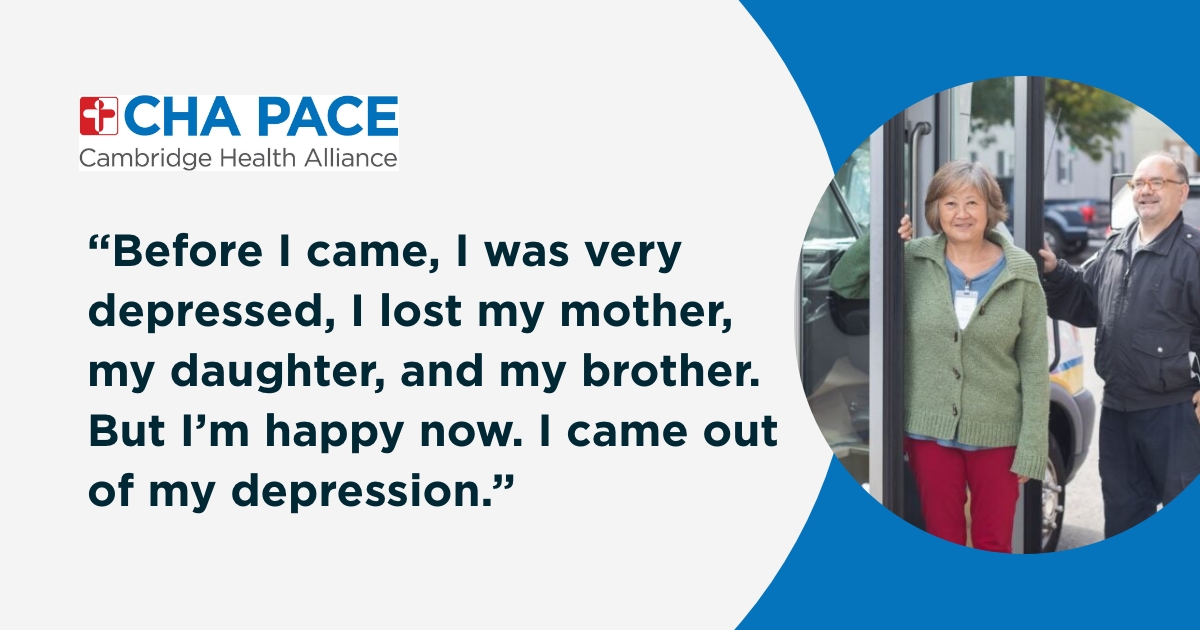
One recipient of PACE housing assistance is Tomiko Matsuda. Shortly after she relocated to the United States from Brazil, her daughter passed away suddenly. Matsuda resided at the YWCA for a period. When PACE placed her in supportive housing with wraparound services, many of her medical conditions improved. She started participating in the PACE adult day program. “Before I came, I was very depressed,” says Matsuda in her native Portuguese through an interpreter – another CHA service. “I lost my mother, my daughter, and my brother. But I’m happy now. I came out of my depression.”

These stories from Kathleen, Gerald, Sheila, and Tomika embody the spirit of PACE: Where You Belong. They narrate the provision of care and the fostering of empowerment, community, and a renewed sense of purpose. As we conclude our series, these tales of inspiration continue to affirm the vital role PACE plays in the lives of older adults and their families.

PACE: Where You Belong – Part 2: Stories of Resilience and Community

In our continued journey through the PACE narrative, we dive into the second chapter of our three-part series. Focusing on the Program of All-Inclusive Care for the Elderly (PACE), we’re privileged to shed light on its transformative reach. As we embrace this month’s theme, “PACE: Where You Belong,” we illuminate the depth and breadth of PACE’s impact, highlighting its undying commitment to enhancing the holistic well-being of its elderly participants and their caregivers. Here are two touching tales that capture the heart of PACE.

Uphams PACE: Sarah’s Dream of Community Living Realized

Since joining Upham’s PACE in 2016, Sara (name altered for privacy) has faced a series of daunting challenges. With a past marked by homelessness, Sara was residing in a PACE-contracted Assisted Living Facility at the time of her registration. Unfortunately, a severe fall that led to hospitalization and subsequent nursing facility care rendered her ineligible to remain in her assisted living space. With limited family backing and the intricate nature of housing documentation, her dreams of community living remained unfulfilled. Sara’s only alternative was long-term residence in a nursing home, a setting she endured for six years.

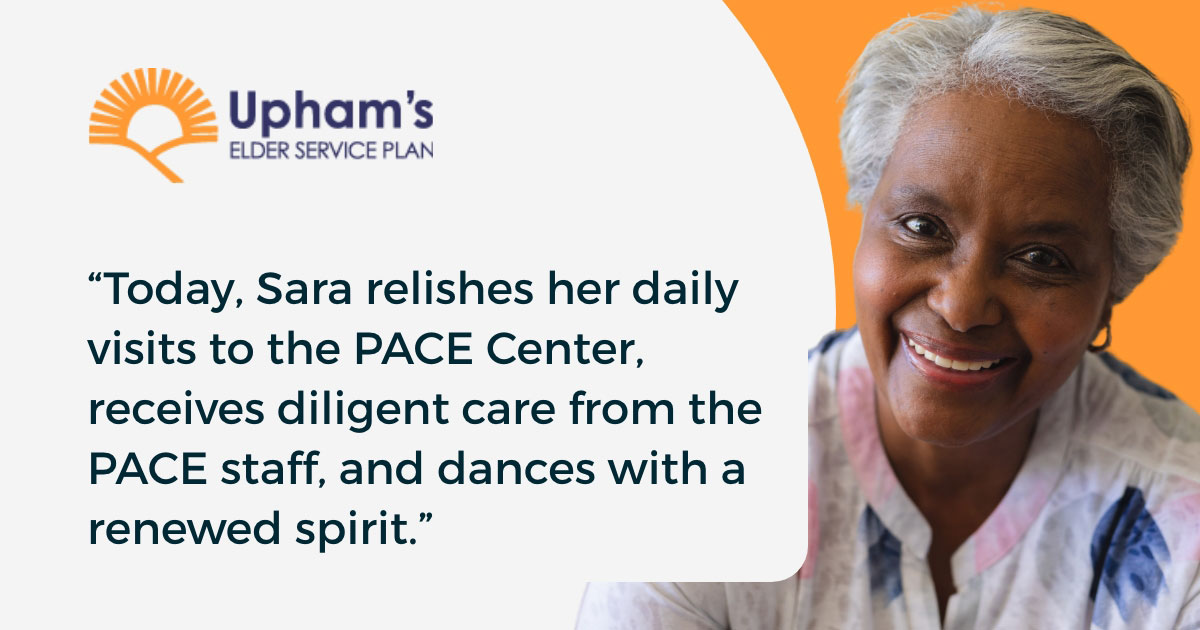
However, Sara’s PACE Interdisciplinary Team (IDT) firmly believed a nursing home wasn’t the right fit for her. Committed to realizing Sara’s dream of community living, the IDT, despite facing hurdles like inadequate family support, regulatory constraints, and Sara’s health issues, tirelessly championed her cause. Their dedication bore fruit earlier this year when Sara transitioned to a PACE supportive housing apartment. Today, Sara relishes her daily visits to the PACE Center, receives diligent care from the PACE staff, and dances with a renewed spirit. Relieved to be out of institutional care, Sara is a testament to the collaborative, patient-centric approach of the PACE IDT and Supportive Housing teams.

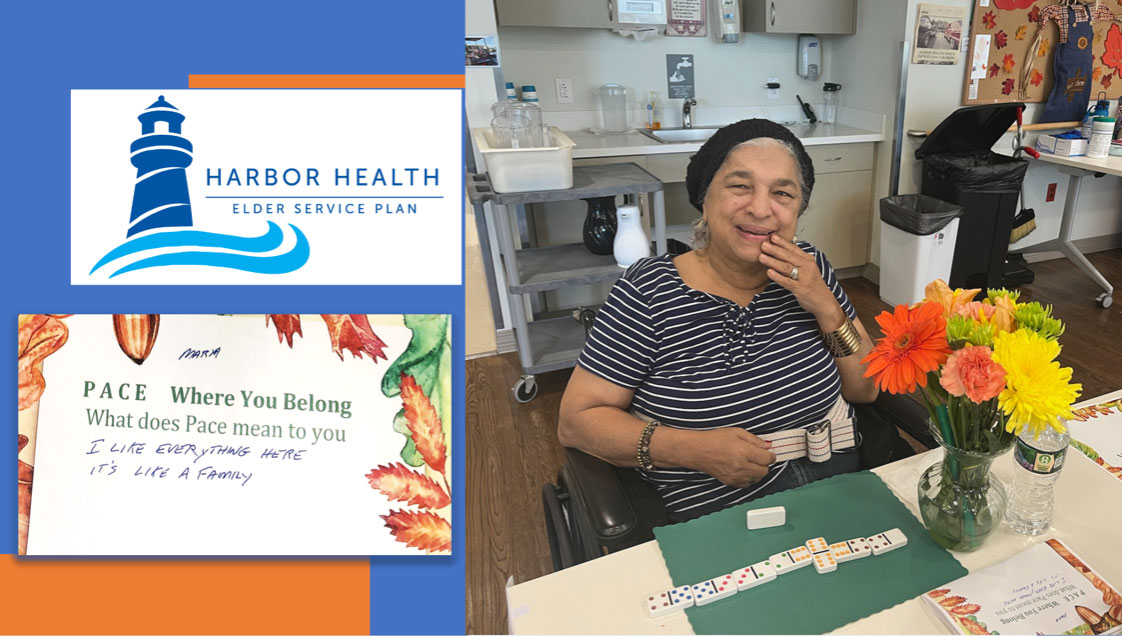
Harbor Health PACE: Maria’s Heartfelt Testimony of Family and Care

Upon learning about the program through her daughter, Maria recalls with gratitude, “I called, and they accepted me – thank God.” Maria paints a poignant picture of loneliness many seniors feel, stating, “If I were at home, I’d have no one to talk to; my daughter would be working, everyone is busy.” However, PACE has given her a vibrant social environment that she cherishes deeply. “I feel like it’s my family,” she says, emphasizing the camaraderie she feels with everyone, from fellow members to the staff – even sharing that the lady who picks up the trash chats with her in Spanish.

Maria’s days at PACE are filled with joyful activities. She enthusiastically shares that from playing dominoes and bingo to dancing, “even though I am in a wheelchair, I still do the shimmy.” While her family in Puerto Rico often inquires about PACE, Maria proudly tells them about her fulfilling experiences and the diverse group of people she interacts with daily. Maria’s words of wisdom to her friends? “If you can join, you should.” One of the most touching aspects of her journey at PACE is her close bond with her aide, Sandia. To Maria, Sandia is more than just an aide; she’s like a daughter. They even share moments of joy, with Maria chatting to Sandia’s grandmother over FaceTime. Maria, who spent her entire life catering to her family, eloquently sums up her experience, “It’s so nice to be at this stage of life and be taken care of so well.”

As this chapter concludes, the tales of Sara and Maria underscore the significance of PACE and its unwavering dedication to its community. Stay with us for the final part of our inspiring series.

PACE: Where You Belong – Part 1: Transforming Lives Through Community-Centric Care for Older Adults

This year, as we celebrate National PACE Month-themed “PACE: Where You Belong,” we begin our 3-part blog series to spotlight each of our eight PACE programs, whose goal is fostering community and connectivity—fundamental elements for individual well-being. For our first blog, we hear stories from three PACE programs; Serenity Care, Mercy LIFE, and Element Care that exemplify the PACE model’s ability to cultivate a compassionate, interconnected community.

The Serenity PACE Approach: Human-Centered Care and Connection

“Who could have ever thought that my ‘golden’ years would turn out to be the happiest period of my life?”

These heartfelt words came from an extraordinary participant who became part of the Serenity Care PACE community four years ago. Initially, she faced the intimidating option of moving into a nursing home, a proposal made even more daunting by language barriers, unfamiliar foods, and her aversion to institutional settings stemming from past experiences.

Then came her serendipitous discovery of Serenity Care PACE. Today, she leads a life of independence and community involvement, especially within her faith group. Her daughter lives in Los Angeles and has witnessed her mother’s metamorphosis:

“Before PACE, every call with my mom left me in tears. She was lonely and anxious, and getting clear information about her health was a struggle. The guilt was overwhelming. Now, she’s cheerful, shares stories about her days at the center, and, most importantly, I’m kept in the loop about her health and medications. Our lives have improved dramatically. We’re so grateful.”

A Lifeline for Independence: The Mercy LIFE PACE Story

In November 2019, Mercy LIFE came into contact with a younger, older adult living with his mother, his lifelong primary caregiver. Born with a brain injury, his life took a turn when his elderly mother could no longer provide the level of care he needed, contemplating a move to long-term care facilities as a last resort.

The man, known for socializing at the neighborhood corner store, often could not return home, resulting in numerous falls from his wheelchair. Faced with this predicament, his sister began exploring alternatives, eventually stumbling upon the PACE program at Mercy LIFE.

After an initial meeting with the family, it was evident that his 86-year-old mother was at her breaking point. Taking a chance on PACE, they enrolled him in the day center, where he now receives personal care and undergoes physical therapy. Now, not only can he use his walker for short distances, but he’s also become a cheerful part of the community, participating in activities and socializing enthusiastically. Thanks to Mercy LIFE PACE, he can age in place, right in the comfort of his home.

A Personal Perspective: Carol Pallazolla and Element Care PACE

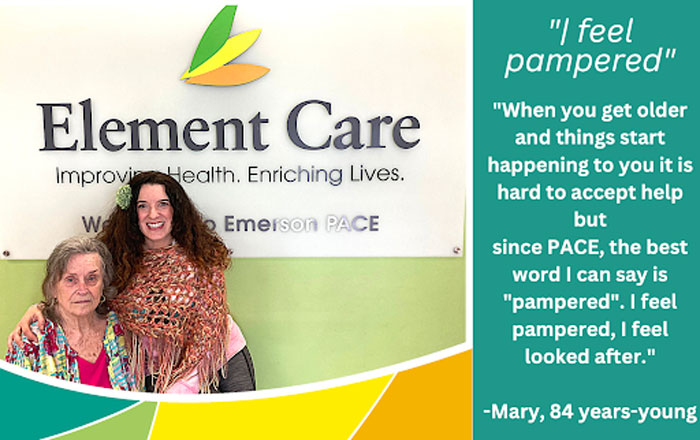
Carol Pallazolla, a resident of Gloucester, serves as the Education and Outreach Coordinator for Element Care PACE. After witnessing her mother, Mary, face health challenges, she encouraged her to join Element Care PACE.

“When I joined PACE, I met so many nice people. My nurse, Emma, and my Physical Therapist Grace, to name a few. I have had shoulder pain for so long, and for the first time in a long time…I am pain-free,” said Mary.

Before joining the program, Mary was saddled with a $45 co-pay for each physical therapy session and struggled with medication costs. Now, she not only receives her medications but also gets prescribed Eliquis, which she couldn’t afford previously. Additionally, Mary got a free Grandpad tablet, through which she participates in virtual exercise classes, plays games, and even finds a lifeline during a power outage to connect with her daughter.

Mary sums it up best:
‘I feel pampered…..When you get older, and things start happening to you, it is hard to accept help, but since PACE, the best word I can say is “pampered.” I feel pampered, I feel looked after.’

As we continue to navigate the complexities of healthcare and aging, especially in these isolating times, the stories above illustrate why PACE isn’t just a program—it’s a community where older adults genuinely belong.

PACE is transforming the lives of older adults and their families

Read the full article here.

Nilda Goodridge couldn’t stop worrying about her mom, Sheila. At 87, Sheila lived alone in Cambridge. She grew increasingly isolated, cried often, and lost weight at an alarming rate. Nilda wasn’t sure what was happening to the strong, independent mother she remembered raising her, a woman who had risen at 4 a.m. for her job as a food service worker for a local hospital.

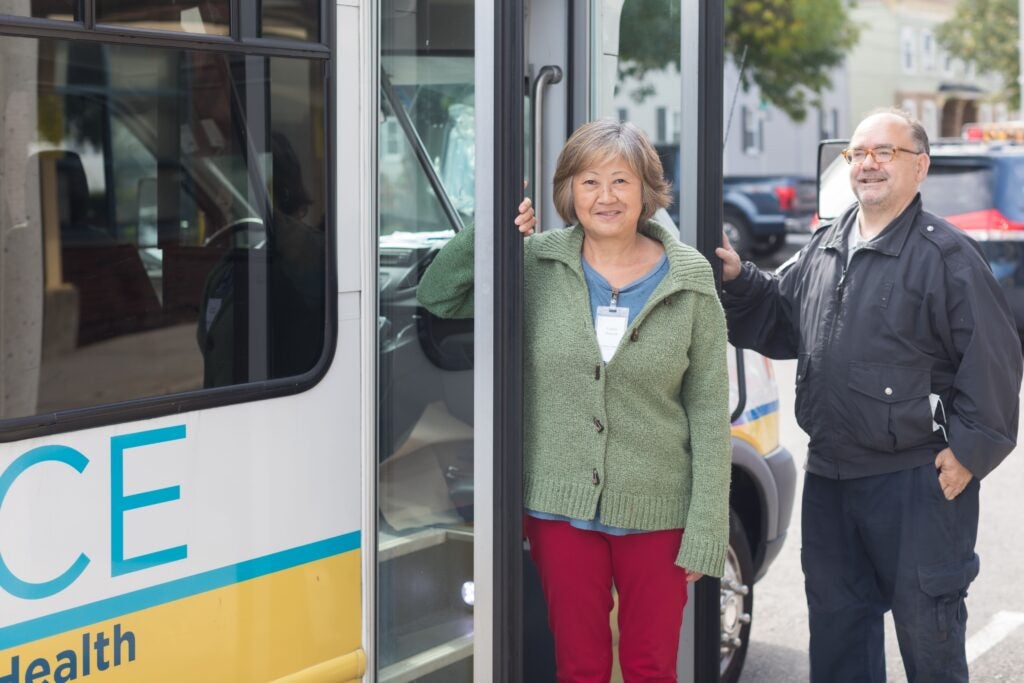
An elderly Asian woman stands in front of a bus she is about to boardBeing disabled herself, Nilda knew she needed help caring for her mom. She spoke with Sheila’s doctor, who recommended Cambridge Health Alliance’s PACE, or Program of All-Inclusive Care for the Elderly. The result, Nilda says, transformed both of their lives.

Three days a week, Sheila Goodridge takes PACE’s van to their adult day program in Cambridge, where she socializes with other older adults, enjoys musical performances and pet therapy, and expresses herself through art projects that she shares with her children and grandchildren. “I love coming here. There’s a lot going on and it keeps my mind interested,” says Sheila, whose laugh comes easily now. “I like the people I’ve met. I say that from my heart because it’s true.”

The colorful, light-filled site is just the start of PACE’s services for Sheila. The program provides her with a primary care physician and other medical professionals, some of whom see her at home when needed. The van transports Sheila to medical appointments, a task that Nilda says previously fell to her. “They took a whole lot of weight off my shoulders.”

What does PACE consist of?

As an interdisciplinary, coordinated program of health care and social services, PACE is designed to enrich the lives of lower-income adults aged 55 and older who typically qualify for nursing home care. “Our goal is to provide comprehensive services for them so they can stay in their homes safely,” says Tara Sherman, PACE’s director of nursing. The program promotes independence and helps participants continue to live in their own homes, which generally, they greatly prefer Sherman says.

In addition to two adult day programs — one in Cambridge and one Malden — PACE’s team of physicians, nurse practitioners, nurses, social workers, and many other professionals supply a striking array of services. Offerings range from exercise and assistance with chores, to personal care aides and mental and nutritional counseling, as well as physical, occupational, and speech therapy. As for any medications a participant may need, all prescriptions are covered in full and delivered to their home for free. Specialty care such as dental and optometry is also covered.

Cambridge Health Alliance (CHA) is dedicated to providing care for all, regardless of income. The structure of PACE reflects that core belief. Low-income older adults receive PACE services for free. More than 600 older adults from 13 cities in the region — including Cambridge, Arlington, Medford, Malden, Everett, and Revere — currently take part.

PACE is one of several CHA programs dedicated to serving the needs of older adults in the Boston-area, helping to fulfill the organization’s commitment to caring for all older adults in the community regardless of income or level of need.

Individualized care is key

PACE’s hallmark is one-on-one attention and care for each participant and family. That approach begins from the first day an older adult or caregiver inquires about the program. During the enrollment process, a team of PACE leaders talks through how best to enhance the participant’s quality of life and recommends a suite of services based on that person’s unique needs.

Every participant benefits from a custom treatment plan. PACE’s flexibility means it can “achieve the participant’s life goals in a way that a traditional fee-for-service practice isn’t able to provide,” says Serena Chao, MD, CHA’s geriatric division chief. Plans are updated every six months.

A group of elderly women sit in a drum circle with big and colorful drumsThe structure of PACE makes it possible to get to know elders in an intimate way. “When we visit participants in their homes, we get to see things that practitioners in offices never know about,” says Sherman, like an empty fridge or a shower stuffed with sweaters when the participant says they shower daily. PACE professionals gently build relationships and trust over time to address those issues, including assistance with daily living.

Meeting participants where they’re at

More than 90% of PACE participants are able to continue living at home, whether in a single family home, senior apartment, supportive housing, or assisted living. PACE maintains contracts with assisted living communities in multiple cities and also partners with the Cambridge Housing Authority. In three Housing Authority buildings, PACE offers supportive 24-hour personal care, such as housekeeping, meal preparation, assistance with appointments, medication reminders, and general orientation about what will happen that day. “If a participant falls or an emergency happens, someone is there for them,” Sherman says.

One beneficiary of PACE housing assistance is Tomiko Matsuda. Soon after she moved to the United States from Brazil, her daughter passed away suddenly. Matsuda lived for a time at the YWCA. When PACE got her into supportive housing with wraparound services, many of her medical conditions improved. She began attending the PACE adult day program. “Before I came, I was very depressed,” says Matsuda in her native Portuguese through an interpreter – another CHA service. “I lost my mother, my daughter, and my brother. But I’m happy now. I came out of my depression.”

Strengthening relationships

An elderly Black woman has her heart checked by a short haired nurseAs much as PACE benefits participants, its services are equally essential for caregivers. Adult children of participants may be raising their own children, work full time, or have other responsibilities. Caregiving alone can be an exhausting, never-ending job, especially taking care of older adults with mild to moderate dementia.

“We say to families, ‘We’re partnering with you,’” says Sherman. “Let us help with the medications and the showers so you can enjoy your time with your loved one. When your relationship isn’t so task-oriented, you can focus on really enjoying your [loved one].”

Twenty percent of current 65-year-olds will need long-term care for more than five years, according to U.S. government projections. CHA’s PACE program is one model for keeping older adults healthy and engaged. Once enrolled, there are no terms or time limits. They can stay in the program for life.

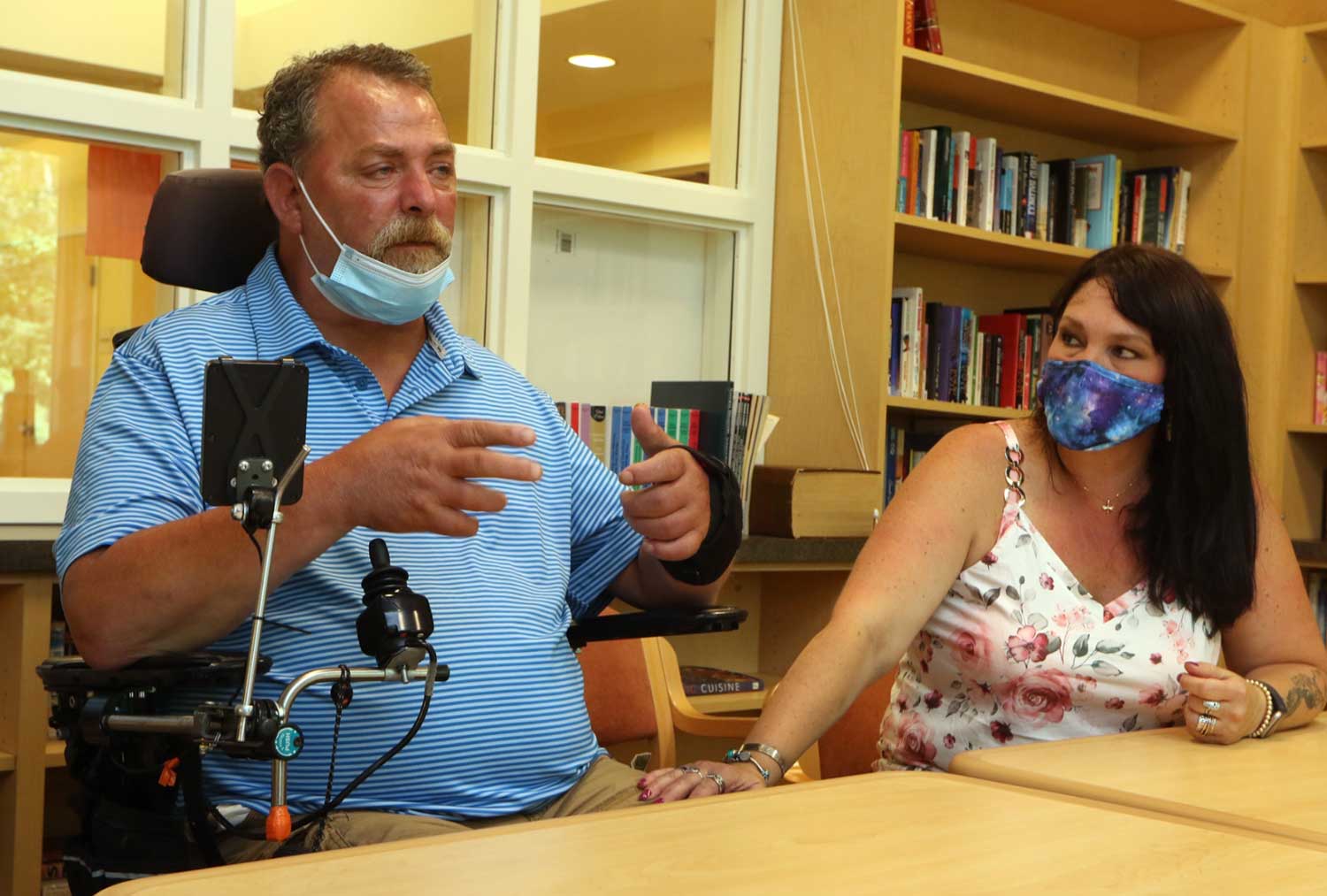
Lowell couple take on spinal cord injury together

Read the full article here.

Tracy Leedberg’s story is rife with sadness, triumph, hope and perseverance.

And when Leedberg reconnected with her high school friend after more than two decades, her life came full circle. James Radcliffe found his way back to Leedberg and, in 2018, the two settled comfortably in Tyngsboro. But one year later, a devastating event left the couple in grief and turmoil.

“In July 2019, Jimmy dove into the pool and couldn’t move,” Leedberg said. “I thought he was just messing around at first.”

But he was not messing around. Radcliffe, 56, had broken his neck. The traumatic C5 injury left him paralyzed from the waist down.

Leedberg became overwhelmed by the new responsibilities in her life. She had no idea how to provide care for someone in Radcliffe’s condition, nor where to find specialized care. Moreover, she felt sadness that her once-strong construction worker partner had been rendered so immobile and helpless. It affected the couple in every aspect of life — mentally, spiritually, romantically and especially financially.

“I had to quit my job because Jimmy needed me at home,” she said. “I became a full-time caregiver.”

She did not object to this new role, but acquiesced to the fact that she needed assistance.

Hope arrived in the subtlest of gestures.

“One day, a few months after my final surgery, I was laying in bed and tried to wiggle my toe,” Radcliffe explained. “And it moved.”

This flicker of hope led him to a physical rehab center in Salem, N.H. He began making slow progress but after the months-long regimen, was released back to home care. At home, he hoped to continue his forward momentum toward recovery with the help of visiting professionals. Then came COVID-19. The home aid they had waited for was curtailed due to travel restrictions and health care protocols.

He again fell into despair. All the physical gains he had made plateaued, then began regressing. His hope and confidence atrophied as well. Leedberg’s health also took a turn as she suffered a stress-related heart attack.

“When I couldn’t care for Jimmy anymore, I became despondent,” she said. “The doctors wanted to put him into a nursing home facility. I didn’t want that and he certainly did not. I didn’t know what to do.”

As the mother of three daughters, now adults, Leedberg has experience in caregiving, but she also knows her limits and they had been reached. Financially, physically and emotionally depleted, the couple did not know where to turn.

Like most things in life, great challenges are overcome by great teamwork. And, like the cavalry, a team appeared. In a happy accident while Googling for something else, Leedberg found out about a program called Summit ElderCare. They said the Fallon Health-run program at 1081 Varnum Ave. in Lowell was the Holy Grail of treatment they had been so desperately seeking.

Fallon, a Worcester-based corporation, has five Summit ElderCare facilities throughout Massachusetts, including in Leominster. For Leedberg and Radcliffe, having one so close to home is an added blessing. The outpatient center offers comprehensive care including physical therapy, occupational therapy, regular medical exams, transportation, even at-home visits as well a social atmosphere conducive to the maintenance of mental health.

Summit ElderCare is a Program of All-inclusive Care for the Elderly, or PACE, and is exactly what Radcliffe needed.

“I started here in March and have made so much progress since then,” he said.

His hands still show signs of strength gained as a construction worker skilled in sheet-metal work. His smile comes easier now, a result of hope and progress.

“When I first got hurt, doctors said I may never walk again. That became a challenge that I intended to face,” Radcliffe said. “Since starting at Summit, I have made steady progress in my therapy.”

With each success comes more confidence.

“And with more confidence, I get more motivated,” he said.

Radcliffe enjoys the five-days-per-week visits to the center, enjoying the activities but always focused on the objective. His physical therapist, Michael Fitzgerald, is part coach and part motivator. The two have become friends, discussing football between exercises.

“At first I needed help just to sit up in bed,” Radcliffe said. “Then I made it to the chair. Over the months I am finally doing some assisted walking.”

On Wednesday, the largest step was taken. Supported only by a belt that Fitzgerald grasped to help stabilize him, Radcliffe walked across the training room floor, much to the surprise and delight of Leedberg.

The timing of this momentous step is also quite serendipitous. September is National Spinal Cord Injury Awareness Month and Radcliffe ushered that in with his proud yet labored gait.

“People don’t understand how complicated SCI care is,” Leedberg said. There are several ancillary health effects including urinary tract infections, self-confidence damage and loss of hope. “He now has hope.”

“She has been a strong advocate for me,” Radcliffe said of Leedberg. “But she is also an advocate for PACE at Summit.”

Leedberg showed appreciation of the organization by being a featured speaker at the annual MassPACE Association Annual Conference in May. She also presented her extensive research paper, “Meeting the Needs of Caregivers to Decrease Burnout.”

Dinah Olanoff, a senior business consultant for Fallon’s PACE strategy, explained how the program works.

“We try to find support that is uniquely directed for each participant. We set up a model of care for every individual,” she said, including Radcliffe.

“He was very depressed when I first met him. Now he is living his best life,” Olanoff said.

But that “best life” will not be achieved by his standards until “I can walk out of here on my own,” Radcliffe said. “I plan to get back to working.”

Meet the Underdog of Senior Care

This article was originally posted on The New York Times. Read the full article here.

Felicia Biteranta was struggling when, five years ago, she enrolled in a PACE program operated by Lutheran Senior Life in Jersey City, N.J.

Having suffered a stroke, she found it hard to eat without choking. She fell frequently; her diabetes was out of control; she had pulmonary disease and asthma. She might miss a medical appointment if she could not arrange or afford a taxi. Her family lived far away.

She was, in short, a candidate for a nursing home. But such a move is what PACE — the Program of All-Inclusive Care for the Elderly — was designed to prevent.

“The main goal is to let people age in place,” said Maria Iavarone, executive director of the PACE program that Ms. Biteranta participates in. “Nobody wants to give up their home. It’s where you’re most comfortable. It’s where you should stay.”

Ms. Biteranta now receives all of her health care through PACE, which monitors her, along with 120 other seniors, meticulously. PACE supplies much of her social life, too.

“Here, they schedule you for appointments,” said Ms. Biteranta, 74, a retired nurse. “They send someone to take you and bring you home.”

Carpal tunnel syndrome in her wrists and arms makes personal care and household chores difficult, so PACE sends an aide to her home 12 hours a week. “She cleans and does my laundry and the shopping,” Ms. Biteranta said. “She knows the food I like.”

PACE provided the portable oxygen unit that freed her from dependence on the larger oxygen tanks she uses at home. It arranged cataract surgery and regularly ferries her to a podiatrist, a cardiologist, an endocrinologist and other specialists. It delivers a host of medications at no charge, including asthma inhalers and diabetes-testing supplies. A staff social worker helped her apply for and move into an apartment in a subsidized building for seniors.

As a Medicaid beneficiary, she pays nothing for this care — no co-pays, deductibles or other out-of-pocket care expenses, and no caps on benefits. Should she require more home care hours or, eventually, a nursing home, PACE will cover those costs, too.

“It’s worry-free,” said Ms. Biteranta, who was preparing to have lunch at the PACE Center as she spoke. “They worry for me.”

Yet both the state and federal government also save money. PACE programs receive a set amount monthly from Medicare and Medicaid to provide nearly everything for people over 55 whose needs qualify them for a nursing home but who don’t want to enter one. This includes doctors’ visits, tests, procedures, physical, occupational and speech therapy, social workers, home care, transportation, medication, dentistry and hearing aids. Participants typically visit a PACE center like the one in Jersey City several times a week for meals and social activities as well as therapy and health monitoring.

That monthly payment is 15 percent lower, on average, than Medicaid would ordinarily pay to care for what are primarily low-income seniors, the National PACE Association said.

Research has shown that PACE programs reduce hospitalization, emergency room visits and nursing home stays. Participants survive longer than similar patients in less comprehensive programs. A study last year by the federal Department of Health and Human Services noted that the PACE program “stands out from our analysis as a consistently ‘high performer.’”

Why, then, do so few PACE programs exist — and enroll so few older Americans? Almost three decades after Medicare and Medicaid began funding PACE programs — today, there are 144, operating 272 centers in 30 states — the endeavor collectively serves fewer than 60,000 people, the National PACE Association reports.

The association estimates that 1.6 million Medicare beneficiaries might meet PACE eligibility requirements. As a list of current programs shows, however, 21 states have no PACE program, and 11 have just one.

Professionals in elder care tend to be fans. “Every geriatrician loves this model,” said Mark Lachs, co-chief of geriatrics and palliative medicine at Weill Cornell Medicine.

Specialists like Dr. Lachs have complained for years that traditional Medicare will cover costly surgery to repair broken hips but won’t pay to install inexpensive grab bars that might prevent falls. With PACE’s fixed payments, “there might be less money, but you spend it the way you want to, without getting on the phone for insurance company approval,” Dr. Lachs said.

At the ArchCare PACE program in New York City, for instance, “if a person’s air-conditioner breaks during a heat wave, we replace it,” said Walid Michelen, the program’s chief medical officer. “If there’s a snowstorm and they need food, we send it.”

With coordinated care and close observation, “you head off a urinary tract infection before it becomes sepsis,” said Jay Luxenberg, the former chief medical officer of the On Lok PACE program in San Francisco. “Or pneumonia when it can still be treated by antibiotics, before you desperately need a hospital.”

Yet growth has been slow. “We’ve had a lot of headwinds over the years,” said Shawn Bloom, the association’s chief executive.

Persuading state legislators to expand PACE enrollment or authorize new programs has proved challenging; such moves represent new expenditures, even if they eventually reduce costs.

For individuals, the enrollment process — which involves a state assessment to determine whether their medical conditions, cognitive status and functional limitations would warrant a nursing home — can take weeks. A family needing elder care immediately may be unable to wait.

Moreover, agreeing to receive all health care from PACE often means relinquishing one’s individual doctor, and some patients balk at that demand. Programs can evade that barrier by allowing PACE programs to work with community physicians.

But prospective patients may not know about PACE at all. “We’re trying to expand awareness, but we don’t have a ‘Got Milk?’ budget,” Mr. Bloom said.

Still, the pandemic has intensified older Americans’ desire for alternative forms of long-term care. “If people didn’t want to be in nursing homes before Covid, they really don’t want to be there now,” Dr. Lachs said. According to the association, Covid deaths among PACE participants have been about one-third those of nursing home residents.

So PACE’s growth is picking up, with 45 new programs expected to begin enrollment in the next two years, in part because of higher federal incentives. Moreover, for-profit companies are starting to establish or acquire PACE programs, although skeptics worry that for-profit status will lower quality.

Several bills introduced in Congress would remove barriers to growth; one would build partnerships with Veterans Affairs hospitals to make PACE more accessible to veterans.

Another intriguing possibility: Encouraging middle-class patients, for whom long-term care costs can also be ruinous, to enroll in PACE. Older adults who aren’t poor enough to qualify for Medicaid can already participate, but few do because their monthly premiums would be high — in many states, $4,000 to $5,000 a month.

But that is still less than they would pay for nursing homes or assisted living in many locations. Policy analysts are looking into ways to reduce costs and expand PACE eligibility for the middle class.

In Jersey City, Ms. Biteranta is doing well, although she misses concerts, Zumba classes, birthday parties and other events at the PACE center. Administrators curtailed such activities during the pandemic but hope to restore them as Covid rates decline.

“Oh, my God, I’d be so depressed” without PACE, Ms. Biteranta said. “It gives me a life.”